Pão de Centeio (Portuguese Rye Bread)
A recipe from Portugal.
🇵🇹 Portugalbreakfastlunchtraditionalbakedvegetarianheartyregional
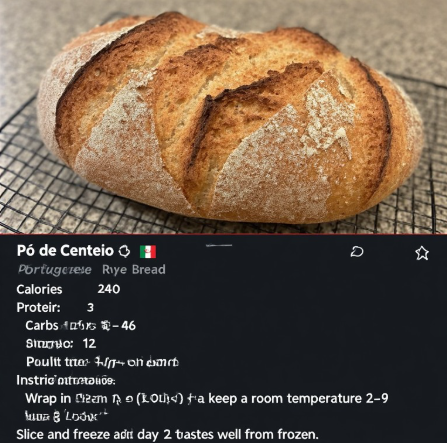
Nutrition (per serving)
240Calories
8 gProtein
46 gCarbs
3 gFat
2 gSugar
600 mgSalt
Ingredients
- 400 g Medium or dark rye flour (centeio)
- 300 g Strong white bread flour
- 420–450 ml Lukewarm water (37–40 °C)
- 20 g Fresh yeast
- 12 g Sea salt or kosher salt
- 1–2 tsp Caraway seeds (optional)
- 1 tbsp Honey or dark molasses (optional)
- 1–2 tbsp Olive oil (for bowl & brushing)
Method
- Crumble fresh yeast into a small bowl with 100 ml of the lukewarm water + honey/molasses (if using). Stir until dissolved. Let stand 8–12 minutes until foamy. (If using instant dry yeast: mix directly with dry flours in next step.)
- In a very large mixing bowl whisk together rye flour, white flour, salt and caraway seeds (if using). Make a deep well in the center. Pour in the foamy yeast mixture + remaining lukewarm water (start with 320 ml). Mix with wooden spoon or hands until no dry flour remains — dough will be very sticky and wet. This is normal for rye.
- Lightly oil work surface and hands (do NOT flour heavily). Turn dough out and knead using stretch-and-fold: pull one side up high and fold over center, rotate 90°, repeat 8–10 times. Dough will gradually become smoother but remains tacky. (Mixer: dough hook low 2 min → medium 4–6 min.) Form into rough ball.
- Lightly oil a large bowl. Place dough inside, turn to coat. Cover tightly with plastic wrap or damp tea towel. Let rise in warm place (24–28 °C) until roughly doubled (2–2.5 hours). Rye rises faster — check after 90 minutes.
- Lightly flour surface with rye flour or rice flour. Gently tip dough out. Fold edges toward center to form loose ball, flip seam-side down. Cup hands and drag dough toward you several times to tighten surface. Place seam-side down on well-floured linen cloth or parchment. Cover loosely.
- Let rise until noticeably puffy and gentle finger poke leaves slow-recovering indentation (45–75 minutes). Do not over-proof.
- Place baking stone or heavy tray on middle rack + empty metal tray on bottom rack. Preheat oven to 240–250 °C (464–482 °F) for 45–60 minutes. (Alternative: preheat Dutch oven with lid.)
- Slash top deeply (one long slash, cross or diagonals) with sharp knife/lame. Slide loaf (on parchment) onto hot stone/tray OR lift into hot Dutch oven and cover. For steam: pour 1 cup boiling water into bottom tray, close door quickly.
- Bake 10 minutes at 240–250 °C, then reduce to 200–210 °C. Bake another 35–45 minutes total until crust is deep dark brown, very firm, and internal temperature reaches 95–98 °C (203–208 °F). Tent with foil if browning too fast after 25 minutes. (Dutch oven: remove lid last 15–20 minutes.)
- Transfer immediately to wire rack. Cool at least 1–1½ hours before slicing — rye sets inside as it cools. Cutting too soon makes crumb gummy.
- Wrap in clean tea towel and keep at room temperature 2–3 days. Slice and freeze after day 2 (toasts well from frozen).
Match meals to your macros
Find meals that fit your calorie and protein targets, free.
Try it free in BmarchaiMore from Portugal
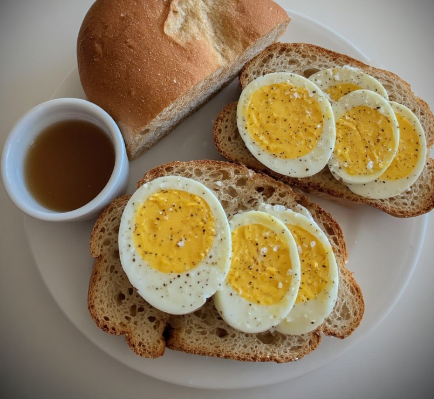
Pão com Ovo Cozido e Chá
340 kcal · 16 g protein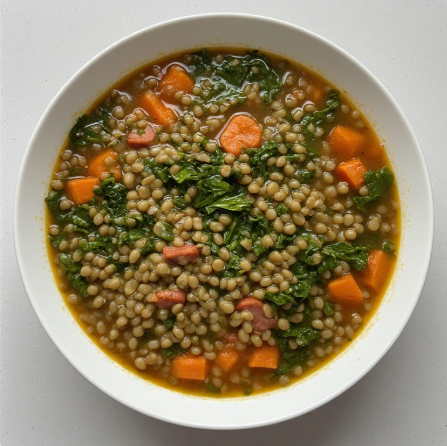
Sopa de Lentilhas com Chouriço e Couve
380 kcal · 22 g protein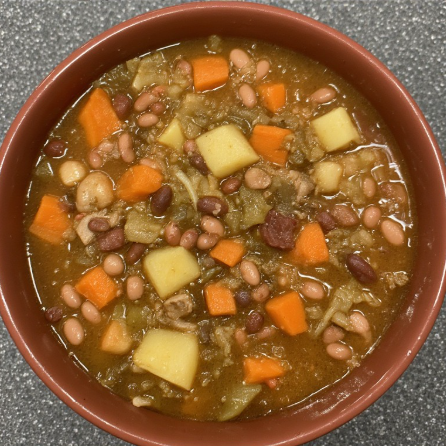
Sopa de Pedra
310 kcal · 16 g protein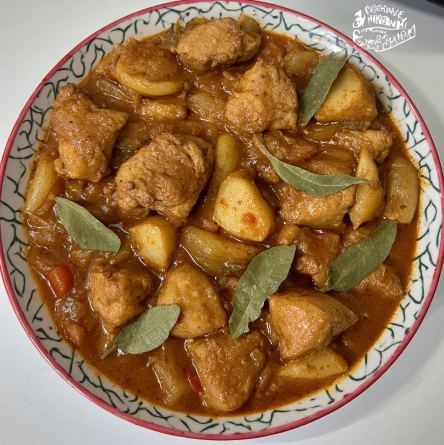
Ensopado de Coelho
480 kcal · 46 g protein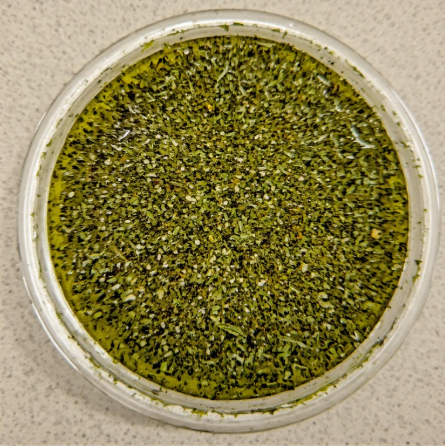
Azeite com Ervas (Herb-Infused Olive Oil Dip)
170 kcal · 0 g protein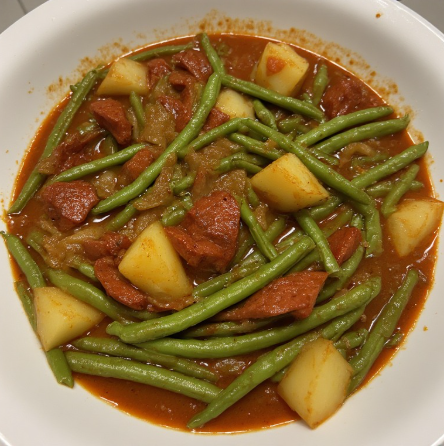
Feijão Verde com Chouriço (One Pot Green Bean Stew)
380 kcal · 18 g proteinGeneral fitness and nutrition information, not medical advice. Check with a qualified professional before starting a new exercise or diet plan, especially if you have an injury or health condition.